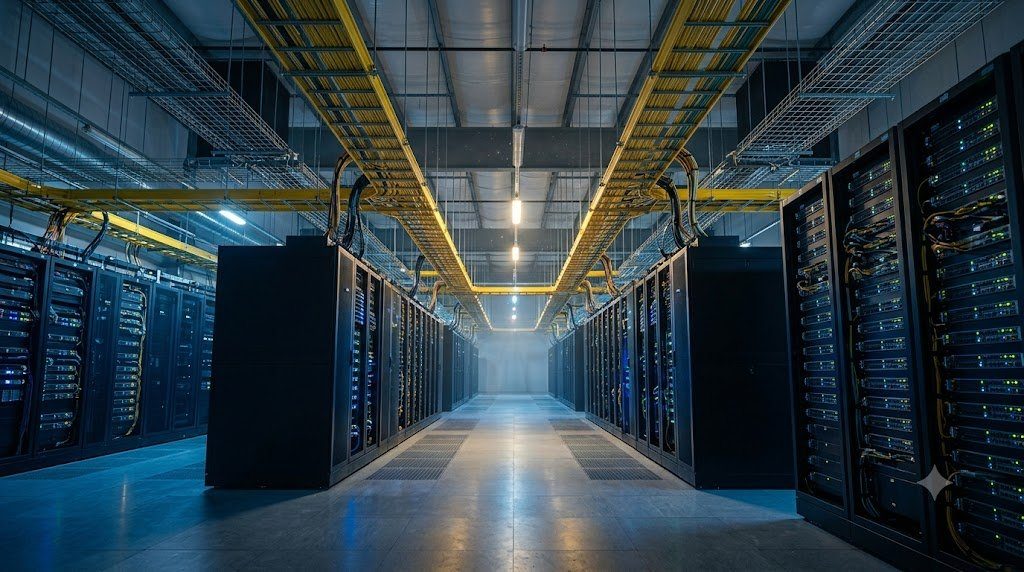
Link Aggregation & LACP (802.3ad): Multi-Chassis MLAG, Hashing Algorithms and Switch Stacking
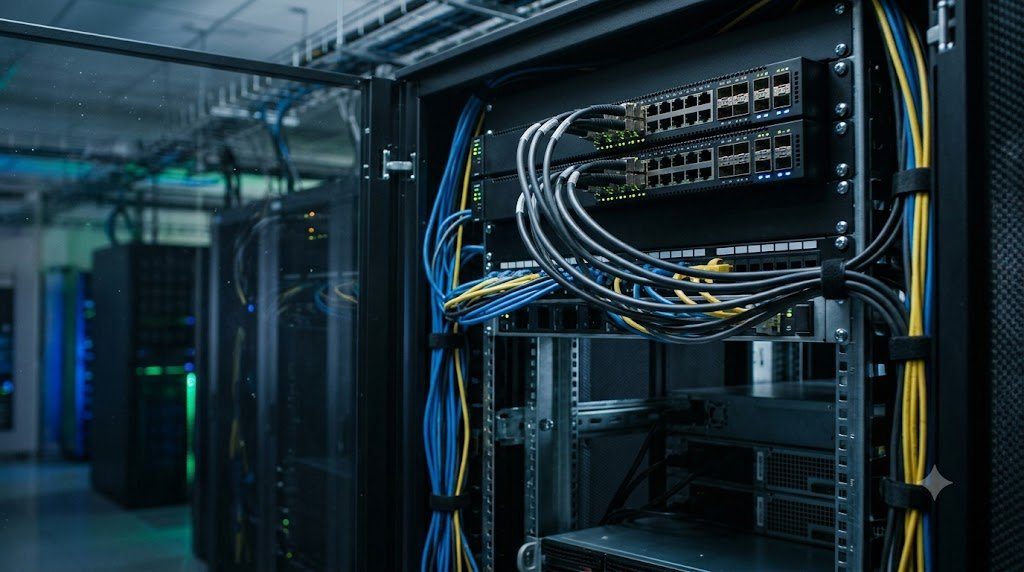
In enterprise local area networks and high-density data center fabrics, individual physical Ethernet switch ports frequently encounter bandwidth saturation and single-point-of-failure vulnerabilities. A single 10 Gbps or 25 Gbps uplink connecting an access layer switch to a core distribution layer represents a rigid operational bottleneck. Rather than replacing physical hardware or installing proprietary non-standard uplinks, … Read more
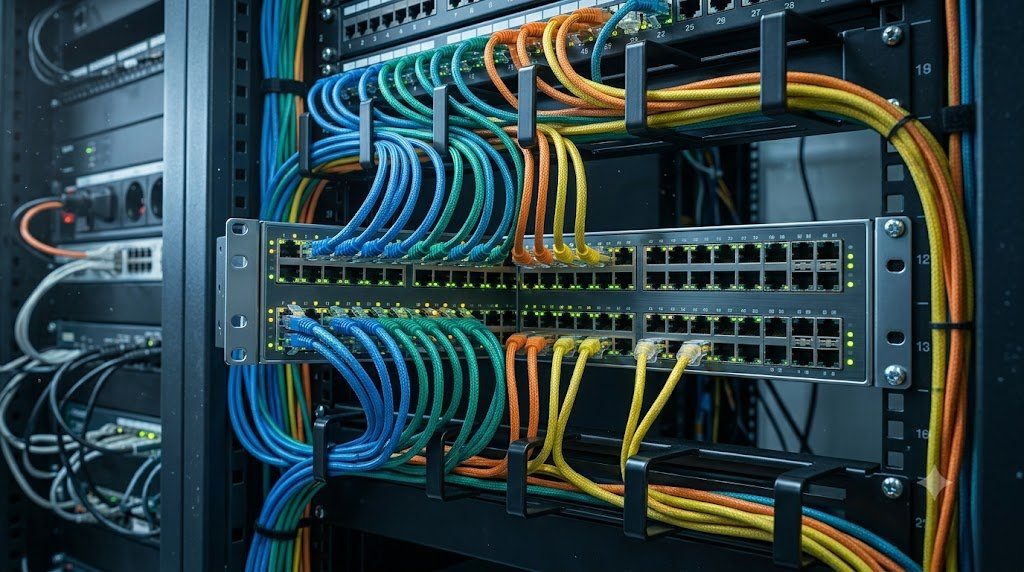
Layer 2 Ethernet Switching: MAC Learning Tables, CAM Memory, 802.1Q VLAN Trunking and Broadcast Storms

In local area network engineering, Layer 2 Ethernet Switching represents the hardware foundation of high-speed data communications. Standardized under IEEE 802.3 and IEEE 802.1D, modern Ethernet switches have completely replaced legacy collision-prone hubs. By micro-segmenting local networks into dedicated, full-duplex collision domains and forwarding frames based on 48-bit Media Access Control (MAC) addresses, switching matrices … Read more

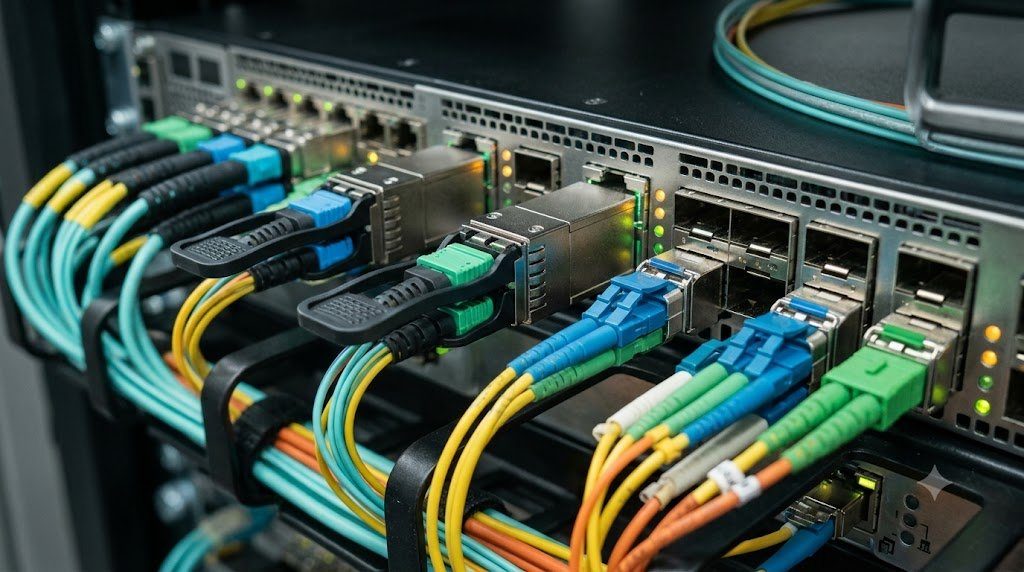
Optical Fiber Transceivers: SFP+ to QSFP-DD Form Factors, OS2 vs. OM4 and Link Budgets

While copper twisted-pair cables dominate local horizontal workspace drops up to 100 meters, modern data center backbones, enterprise campus backbones, and inter-city telecommunications networks rely entirely on Optical Fiber Communications. Optical fiber utilizes modulated photons of infrared light guided through high-purity silica glass cores via total internal reflection, achieving near-infinite bandwidth, zero electromagnetic susceptibility, and … Read more

Twisted-Pair Ethernet Cabling: Cat5e to Cat8 Standards, Differential Signaling and Alien Crosstalk

In the foundational architecture of Local Area Networks (LAN), twisted-pair copper cabling remains the most ubiquitous physical transmission medium deployed worldwide. First standardized under IEEE 802.3i (10BASE-T) in 1990, balanced twisted-pair copper media has evolved through successive ANSI/TIA-568 and ISO/IEC 11801 category specifications, scaling transmission bandwidth from 10 Mbps over Category 3 telephone wire up … Read more